Challenge
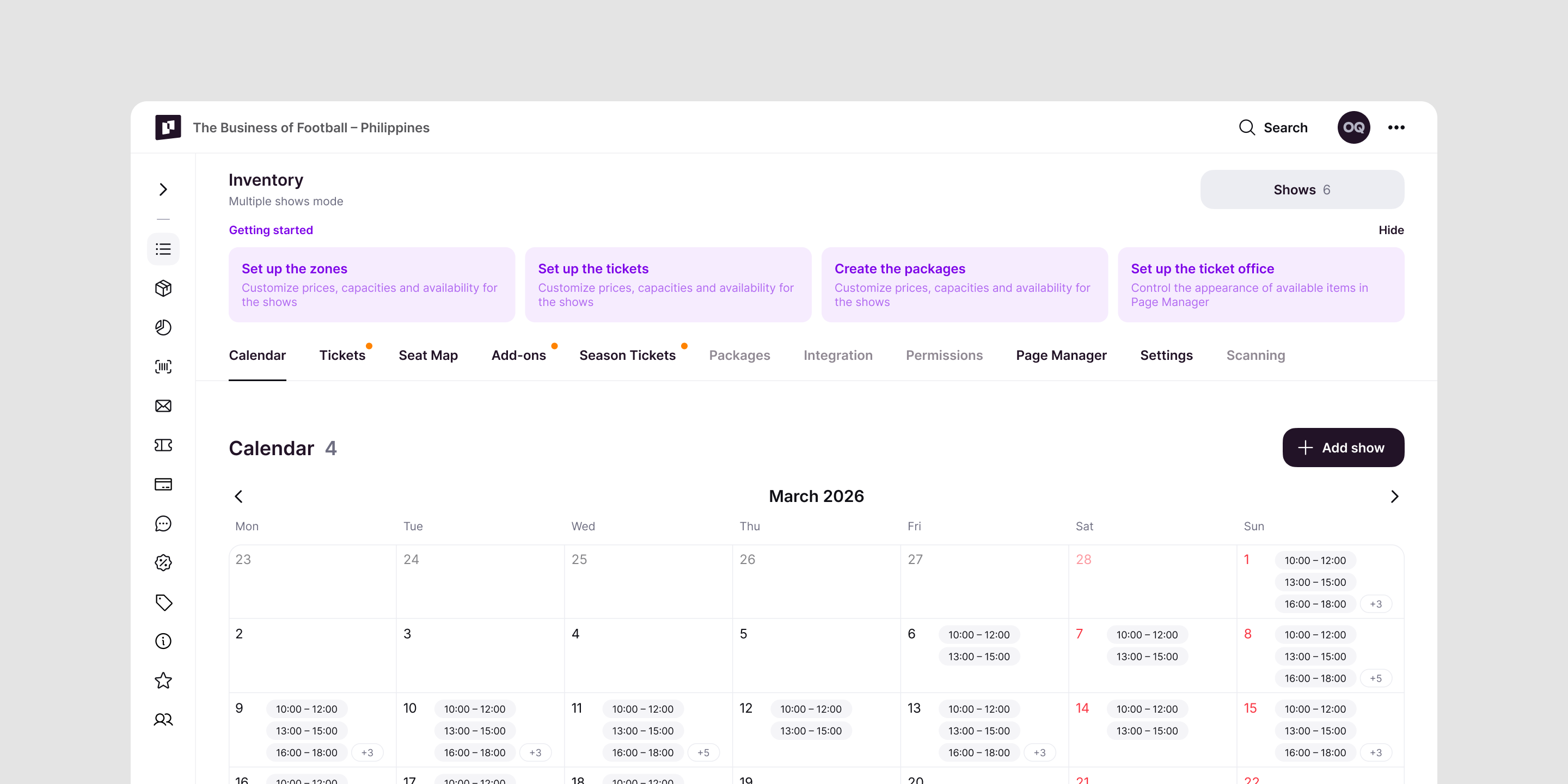
Managing inventory across two separate platforms created friction for both organisers and the internal operations team. Organisers mostly rely on ops team since existing toolset lacked the tools to configure their events independently, while ops handled a significant portion of setup manually: copy-pasting entities and filling gaps the interface simply couldn't support.
Goal
To consolidate two legacy inventory platforms into a single unified tool, reduce manual workload for the operations team, and give organisers enough control to manage their setups independently – without relying on internal support for routine tasks.
Discovery
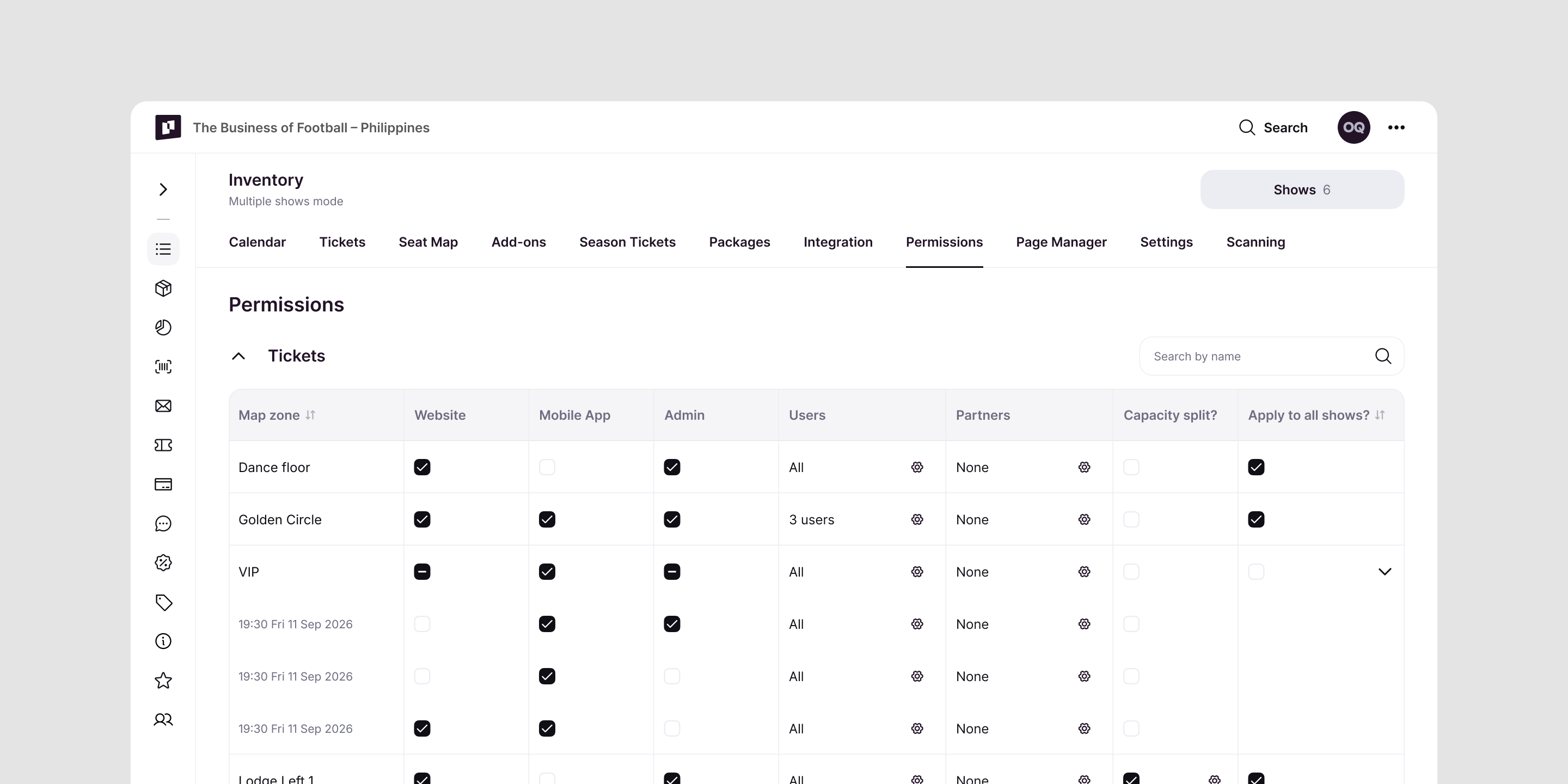
We ran a series of interviews with organisers alongside dedicated sessions with the operations team across several domains. Two distinct problem layers emerged. On the ops side, the interface didn't support inline repetitive scenarios – same packages had to be set up separately for identical shows. On the organiser side, the available setup types didn't match how they actually worked — organisers were repurposing features like Multi-show configurations to handle attraction-type events because the right tools simply didn't exist. The core insight was that the product was missing self-service infrastructure, and the ops team had quietly become the workaround.
Together with analytics team we also done a competitor analysis of organiser tools across different ticketing platforms and highlighted nice-to-have features and better workaround for the same features that we've had on our platform.
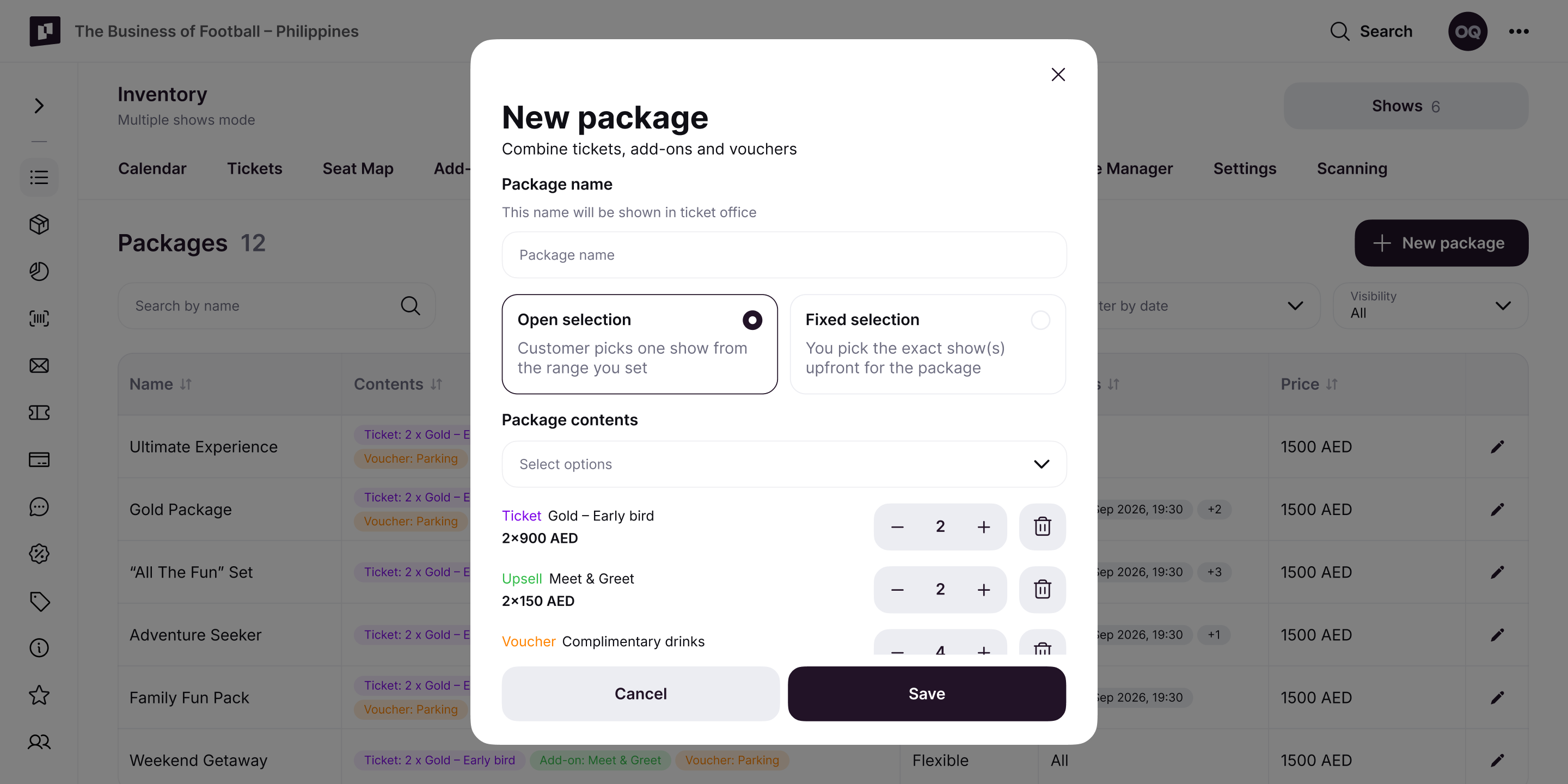
Popup edits
For creating more complex entities we're sticking to popups. They keep the user in context, which is visible enough to understand what they're editing, without losing sight of the broader inventory view.
AI Implentation
For this project we tested the designs by vibe-coding them into an interactive prototype using Claude Code. This allowed us to observe how the operations team tackles complex edge cases in real conditions and gather feedback rapidly before committing to the final implementation.
Interviews
After designing majority of screens I've created an interactive mockup using Claude Code. It helped us together with analytics team measure the coverage of potential scenarios and to understand how users interact with each feature
Results
The clearest measure of success was behavioural: organisers stopped copy-pasting existing events as a workaround and began creating from scratch. The majority of routine cases are now executed by organisers directly. Usage of legacy platform features has significantly reduced for new events.